
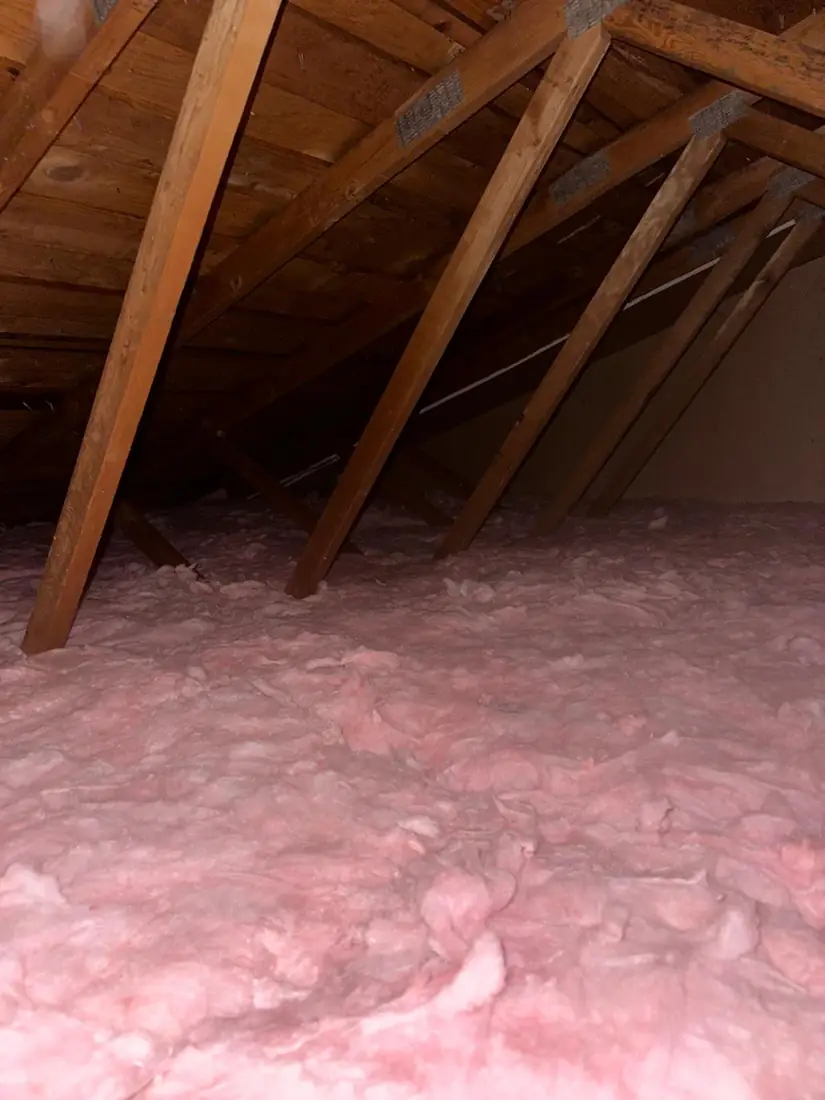
Yes, attic insulation is our most common job, and we do it all over San Jose and the Bay Area. Most attics can be inspected within a few days of your call, and a typical top-off is finished in a single day. We measure what you have, air seal the gaps, and bring the attic up to the R-38 to R-49 range that makes a real difference in this climate.
The attic is where most homes lose the fight with the weather. In July, a Bay Area attic can run well over 130 degrees, and that heat pushes straight down through a thin ceiling into the bedrooms. In January the same ceiling leaks the warm air your furnace just paid for. A lot of the homes we walk into were built in the 1950s through the 1980s and still have the original 3 or 4 inches of insulation, now flattened, shifted, and full of gaps where cable installers and pest guys walked through.
What an attic insulation job with us includes
We do not just show up and blow material over whatever is there. The prep work is where the performance comes from.
- Inspection and measurementWe check the depth in several spots, note the type of insulation, and look for rodent activity, roof leaks, moisture stains, old knob and tube wiring and disconnected ducts. You get photos.
- Air sealingInsulation slows heat, but it does not stop air. We seal the big leaks first: top plates, plumbing and wiring holes, gaps around the attic hatch and chases that open into walls.
- Baffles and damsVent baffles go in at the eaves so the new insulation does not choke off attic ventilation. We build dams around the hatch and keep proper clearance from flues and any light fixtures that are not rated for contact.
- Depth markers and installDepth rulers go up across the attic so the finished depth can be checked. Then we blow or lay insulation to the target R-value evenly, edge to edge.
- Attic card and cleanupWe post a card at the hatch with the material, depth and installed R-value, clean up, and walk you through the finished work.
Blown-in vs. batts in the attic
Both work. The right one depends on your attic, not on what a salesperson prefers to install.
Blown-in (loose-fill) insulation
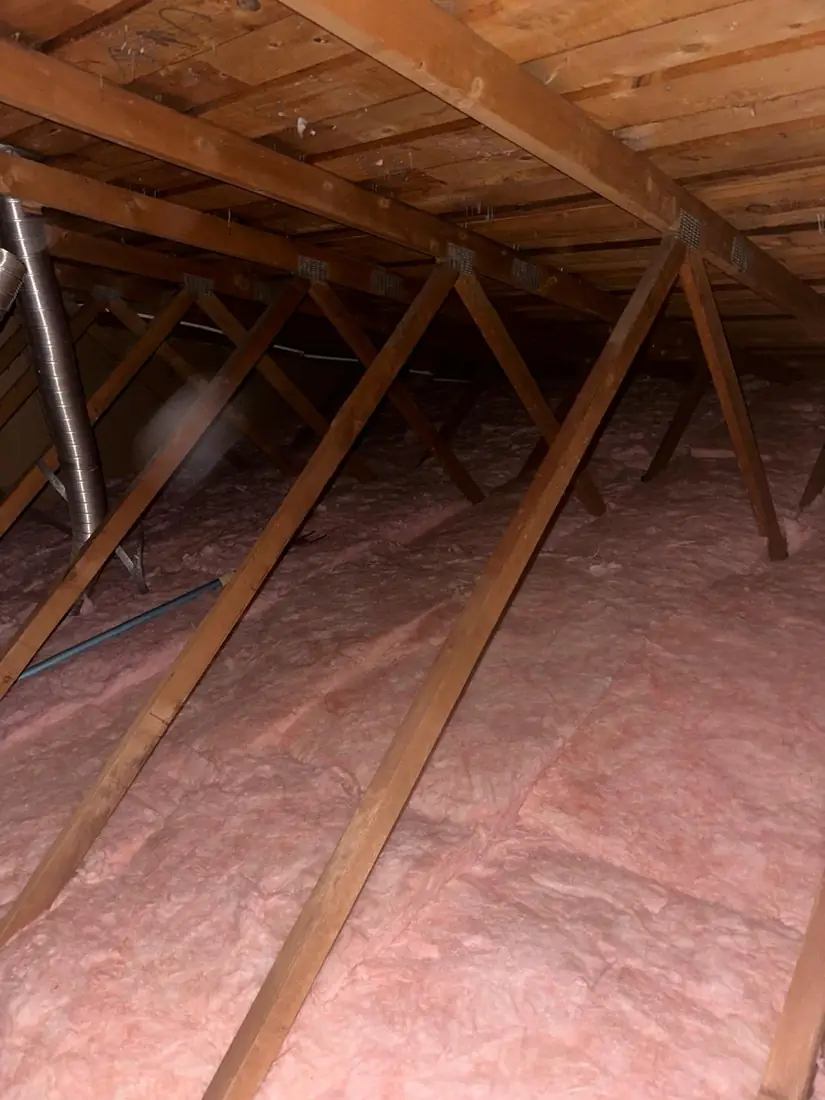
Blown fiberglass or cellulose is fed through a hose and fills every bay to an even depth, including around wiring, blocking, and the odd framing that older homes are full of. For most existing attics in the Bay Area, it is the most complete and most cost effective option. Loose-fill fiberglass runs roughly R-2.2 to R-2.9 per inch, and cellulose roughly R-3.2 to R-3.8 per inch, so reaching R-49 takes about 13 to 20 inches depending on the product.
Batt insulation
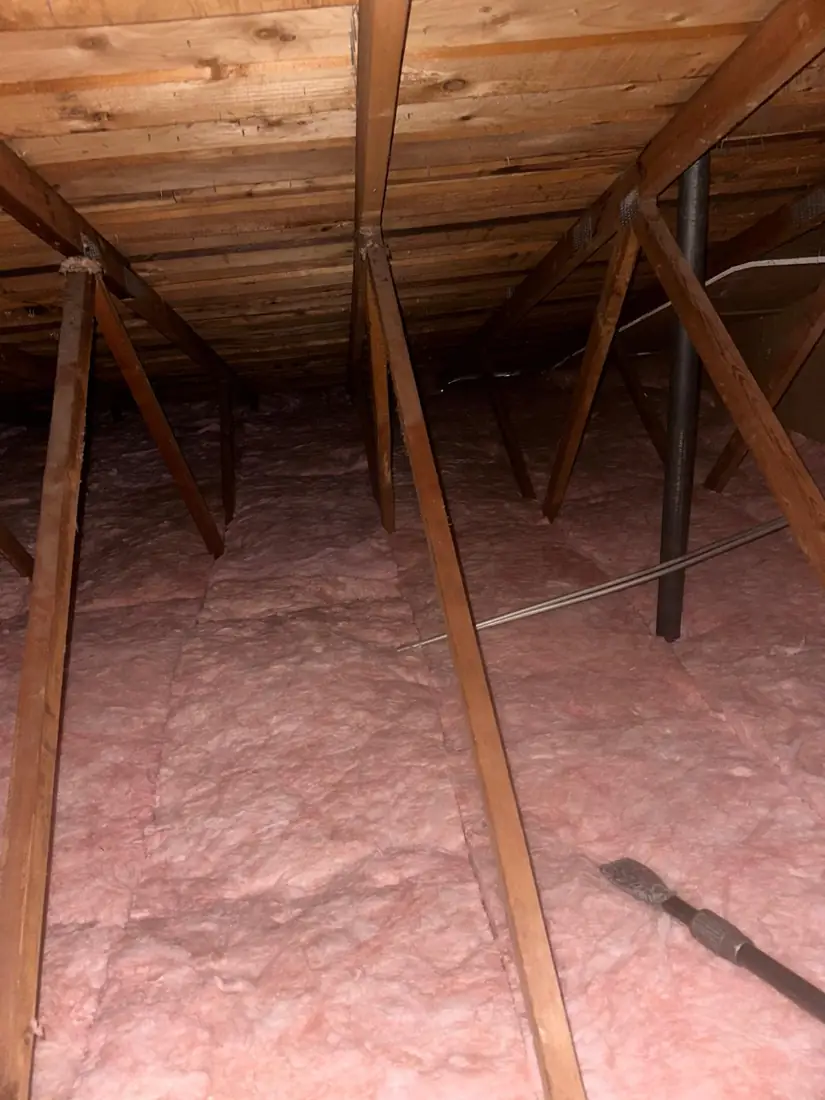
Batts are pre-cut blankets that fit between joists. They make sense in attics with open, regular framing and good access, or where a homeowner prefers a material that can be lifted later for access. The catch is that batts only perform when they are cut carefully around every obstruction without gaps or compression. We install batts to that standard, and you can see the results on our batt insulation page.
When the answer is removal first
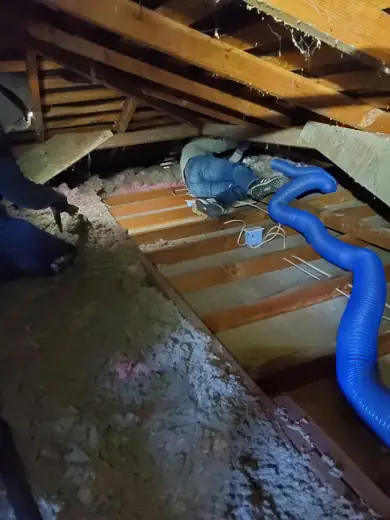
If what is up there is contaminated with rodent droppings, soaked from an old roof leak, or smells like smoke, adding more on top just buries the problem. In that case the job starts with insulation removal and attic sanitizing, and the new insulation goes onto a clean, sealed attic floor.
Why a thin attic costs you every month
Under-insulated attics are the most common energy problem we find in Bay Area homes, and they show up in three ways.
Hot upstairs rooms and a running AC
If your upstairs is five to ten degrees warmer than downstairs on a summer afternoon, the ceiling is usually the culprit. Heat radiates down from the roof deck through whatever insulation is left. Bringing the attic up to R-38 or R-49 slows that heat so your AC is not fighting the roof all day.
Ducts sitting in a hot attic
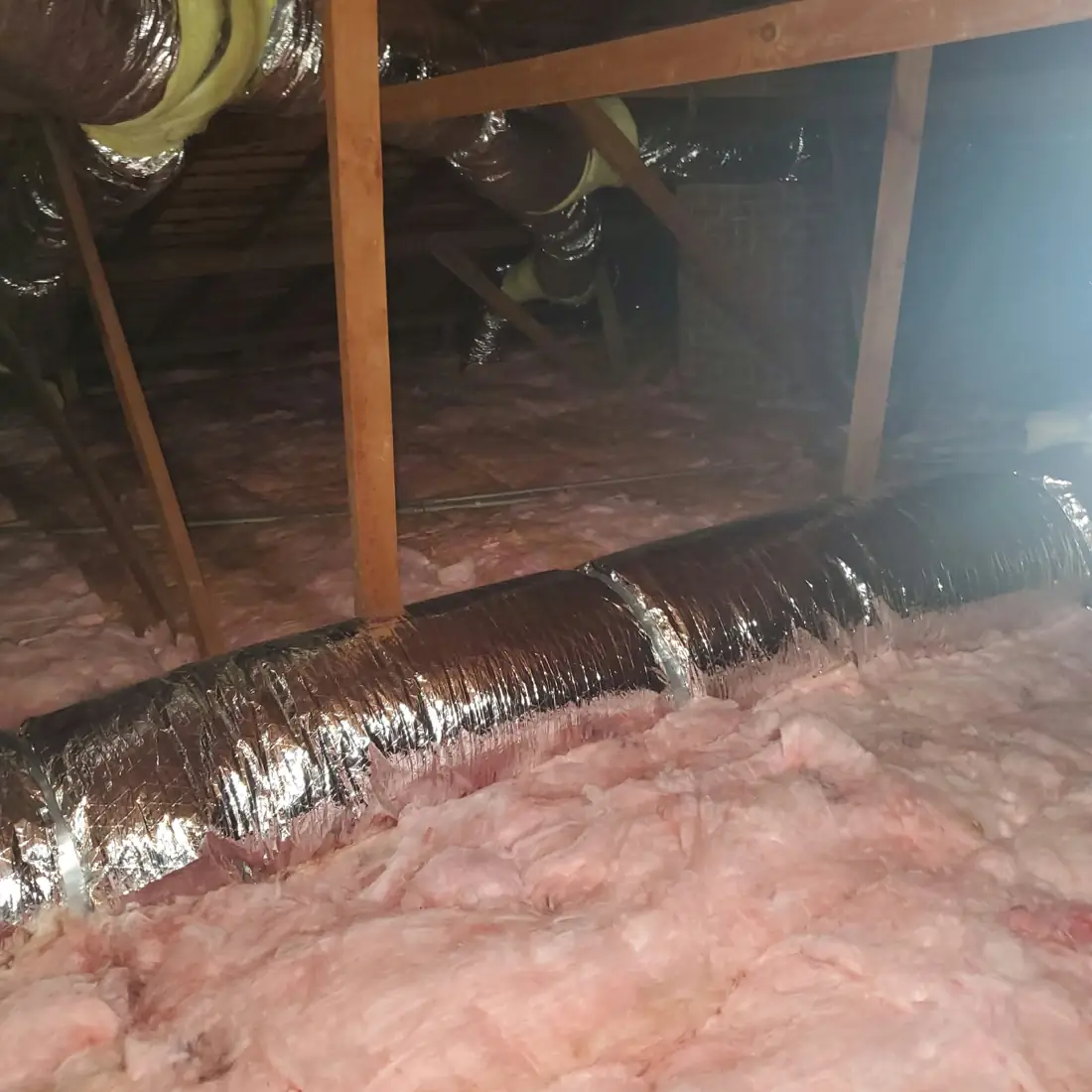
Most Bay Area homes run their heating and cooling ducts through the attic. When the attic is poorly insulated and leaky, the ducts sit in extreme temperatures and the air cools or heats before it reaches the room. A properly insulated and sealed attic floor keeps the living space from absorbing that heat, and we make sure ducts are covered or cleared the right way during the install.
Code and resale
California's energy code generally points to R-49 when an attic is part of a qualifying alteration, such as some roof or HVAC work. Home inspectors also flag thin attic insulation on almost every older house. Doing it right now saves a rushed fix when you sell or remodel. We install to current code and pull permits when the job requires one.
R-value targets for Bay Area attics
| What you have now | Typical target | What that usually means |
|---|---|---|
| Nothing, or joists showing | R-49 | Full install, about 13 to 20 inches of loose-fill |
| 3 to 4 inches in good shape | R-38 to R-49 | Top-off over the existing layer after air sealing |
| Old, dirty, rodent damaged or wet | R-49 | Removal, sanitize, seal, then a new install |
| R-38 or more, still uncomfortable | Find the leak | Look for gaps, compression, open chases and duct issues |
Not sure where you are? Use the attic R-value checker on our home page with a tape measure, or call and we will measure it for you.
What affects the price of attic insulation
We do not publish a flat per-square-foot number because two attics the same size can be very different jobs. What moves the price:
- Attic square footage and how easy it is to move around in (low slopes and tight eaves take longer)
- How much insulation is already there and whether it can stay
- Target R-value and the material you choose, blown fiberglass, cellulose or batts
- How much air sealing, baffling and damming the attic needs
- Whether removal and sanitizing come first
Straight talk on rebates: the BayREN Home+ insulation rebate ended in August 2024, and the federal 25C tax credit does not apply to insulation installed after December 31, 2025. Some companies still advertise both. We will tell you what, if anything, currently applies to your home.
Frequently asked questions
What R-value does a San Jose attic need?
For an attic with little or no insulation, ENERGY STAR recommends R-49 in the San Jose climate, and new attic work in California is usually taken to R-49. If you already have 3 to 4 inches in decent shape, topping up to at least R-38 is the common target.
How long does attic insulation take to install?
A standard single family attic top-off is usually done in one day, often in a few hours. If the old insulation has to come out first, plan on one to two days for removal, cleaning and the new install.
Is blown-in or batt insulation better for an attic?
In an existing attic, blown-in usually wins because it fills around wiring, framing and odd joist spacing without gaps. Batts work well in open, regular framing like new construction or when the attic is empty and easy to reach.
Can you put new insulation on top of old insulation?
Yes, as long as the existing layer is dry, clean and free of rodent droppings or mold. If it is contaminated, wet or smoke damaged, it should be removed first so the new insulation is not hiding a problem.
Will attic insulation help with summer heat upstairs?
Yes. Most summer heat in upstairs rooms comes down through the ceiling from a hot attic. Bringing the attic up to R-38 or R-49 and sealing the air leaks at the ceiling plane is usually the single biggest comfort fix for a two story home.
How much does attic insulation cost in the Bay Area?
It depends on the size of the attic, how much is already there, whether anything needs to be removed, and the target R-value. We measure in person and give you a written price before any work starts, so you are never guessing.
Related services
Insulation Removal
Vacuum removal of old, compressed, wet or rodent-damaged insulation, then attic sanitizing.
Learn more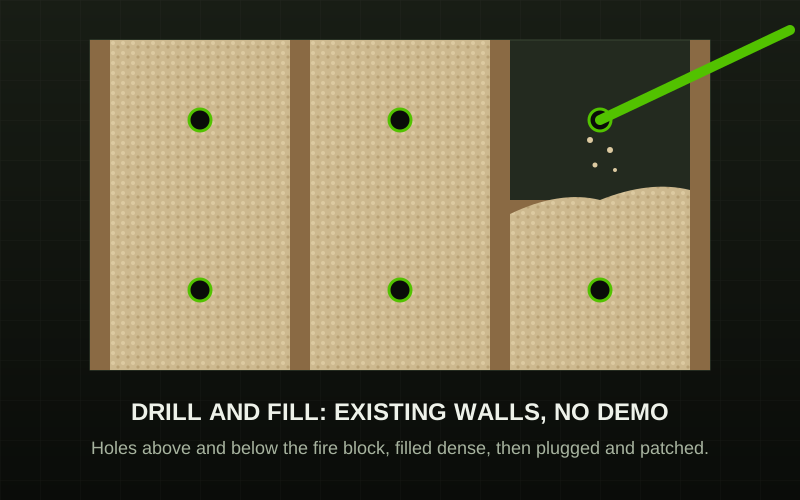
Drill & Fill Blow-In
Blow-in insulation for closed walls in older homes. Small holes, no demolition.
Learn more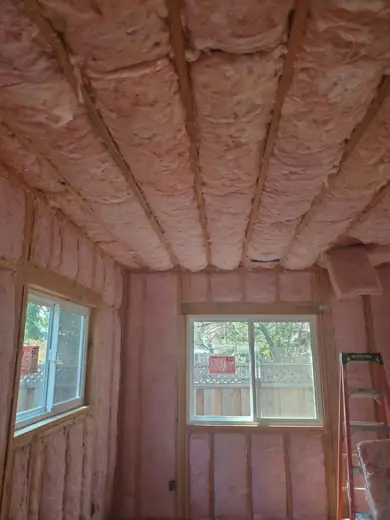
Batt Insulation
Fiberglass and mineral wool batts for walls, ceilings and floors in new builds and remodels.
Learn more