
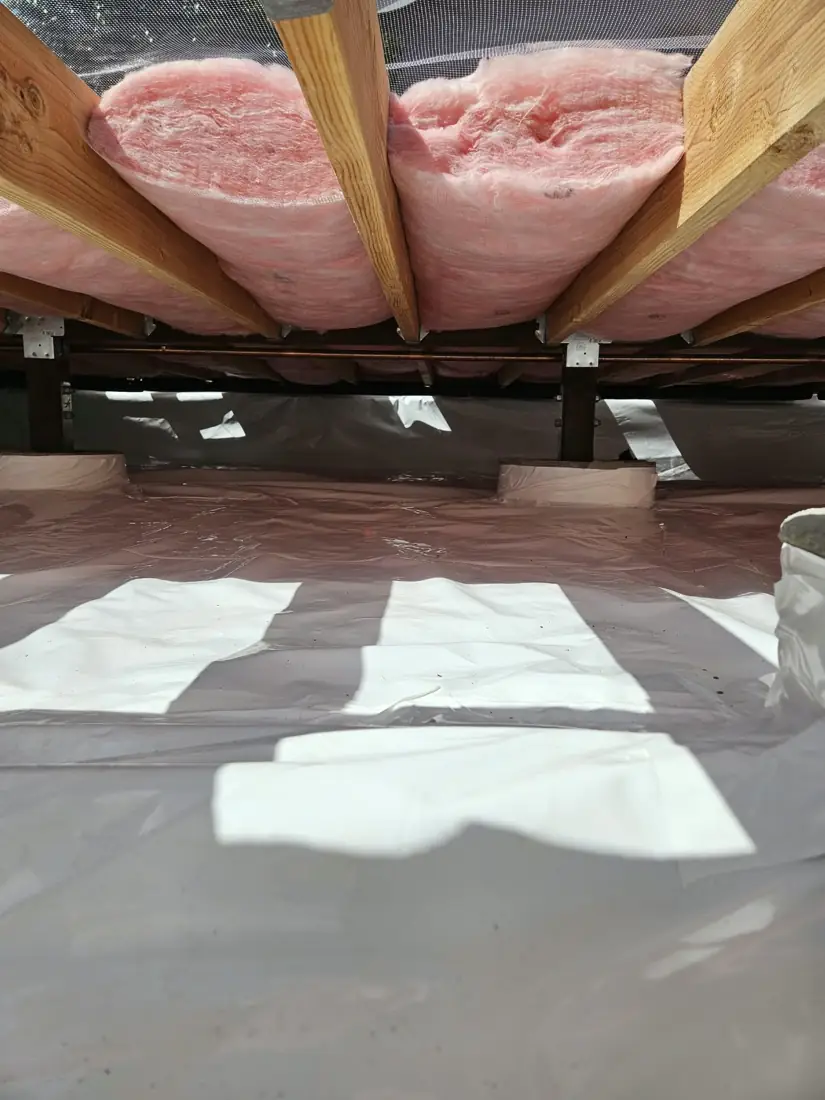
Yes, we insulate crawl spaces and raised foundation floors in San Jose and the Bay Area, and most homes are done in one day. We remove fallen or damaged batts, install new underfloor insulation held tight to the subfloor, and lay a ground vapor barrier where the soil is exposed.
A lot of Bay Area homes sit on raised foundations with a vented crawl space underneath. In winter, cool air moves through those vents all day, and if the floor above is not insulated, or the insulation is lying in the dirt, you feel it through your feet. Crawl spaces are also where moisture, musty smells and rodents like to start. Getting the crawl space right fixes more than just cold floors.
What our crawl space service includes
- Crawl space inspectionWe check the condition of any existing insulation, look for standing water, damp soil, plumbing leaks, rodent activity and damaged vent screens, and take photos for you.
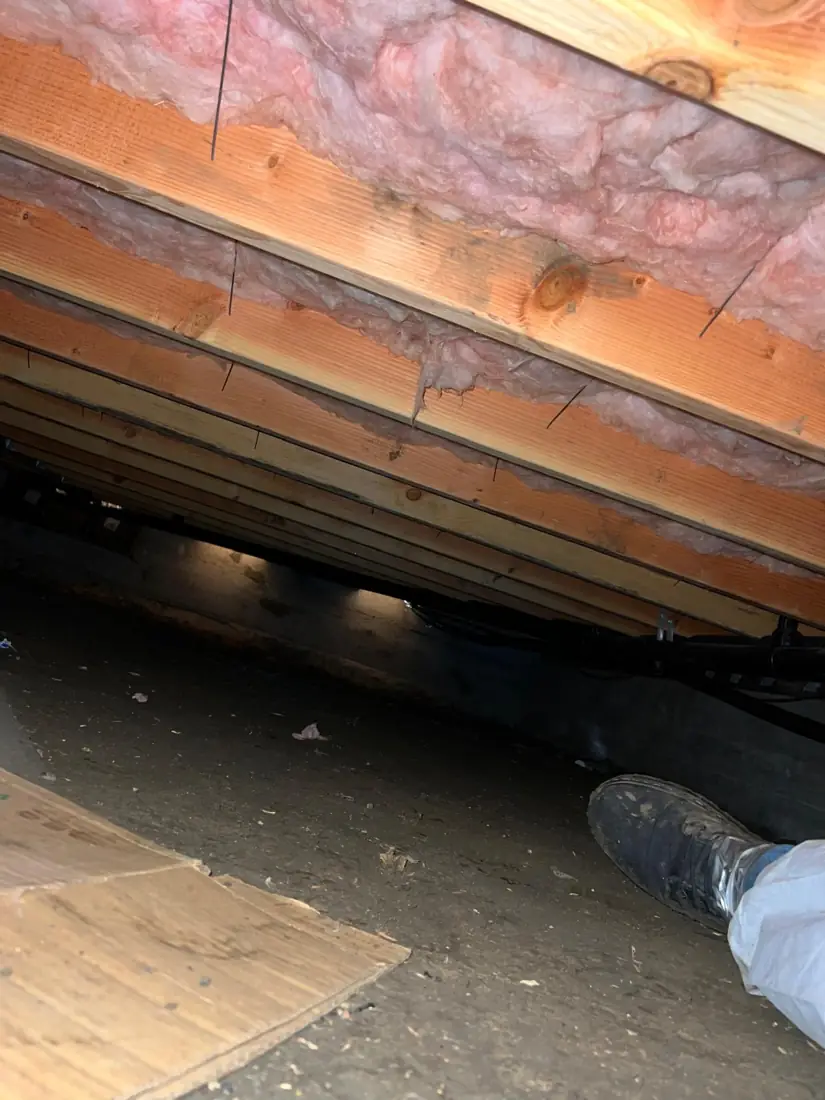
- Remove what is failingFallen, wet or rodent damaged batts and debris are removed and bagged out, not left in the crawl space.
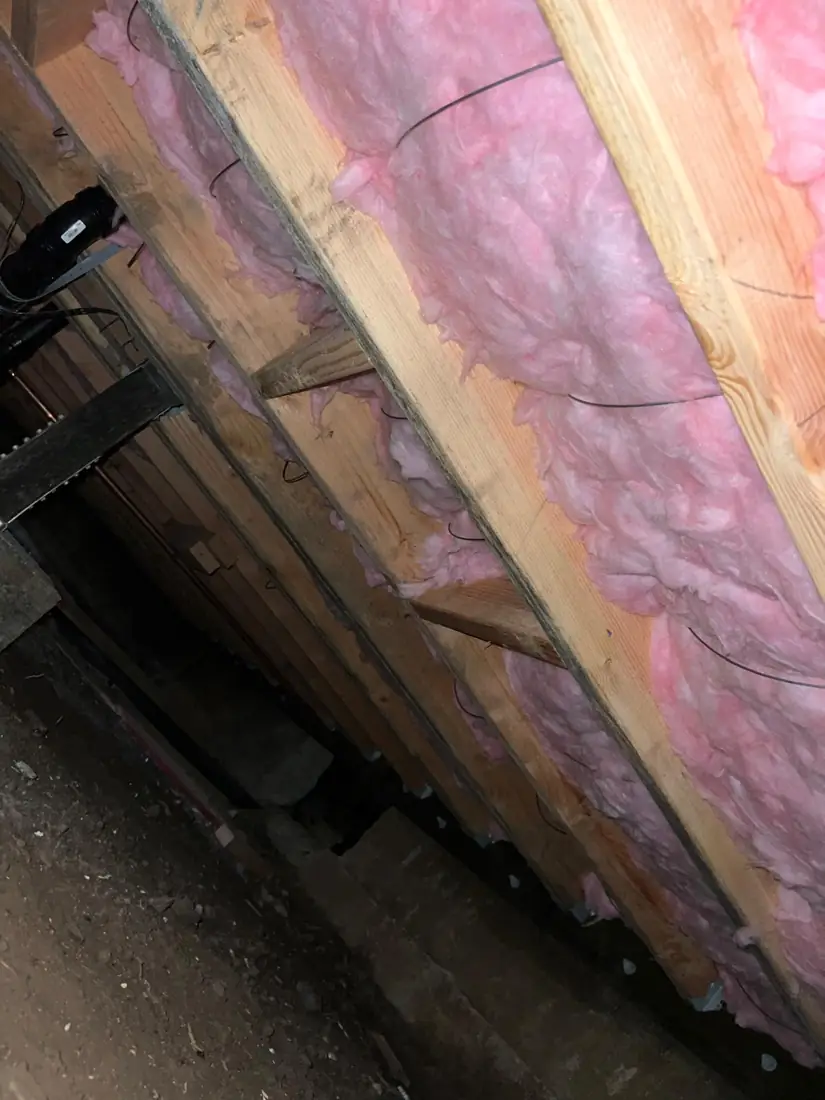
- Install underfloor insulationBatts go between the floor joists, cut to fit around plumbing and ducts, typically R-19.
- Support every battWire supports or netting hold the insulation in full contact with the subfloor, so it does not sag and leave an air gap.
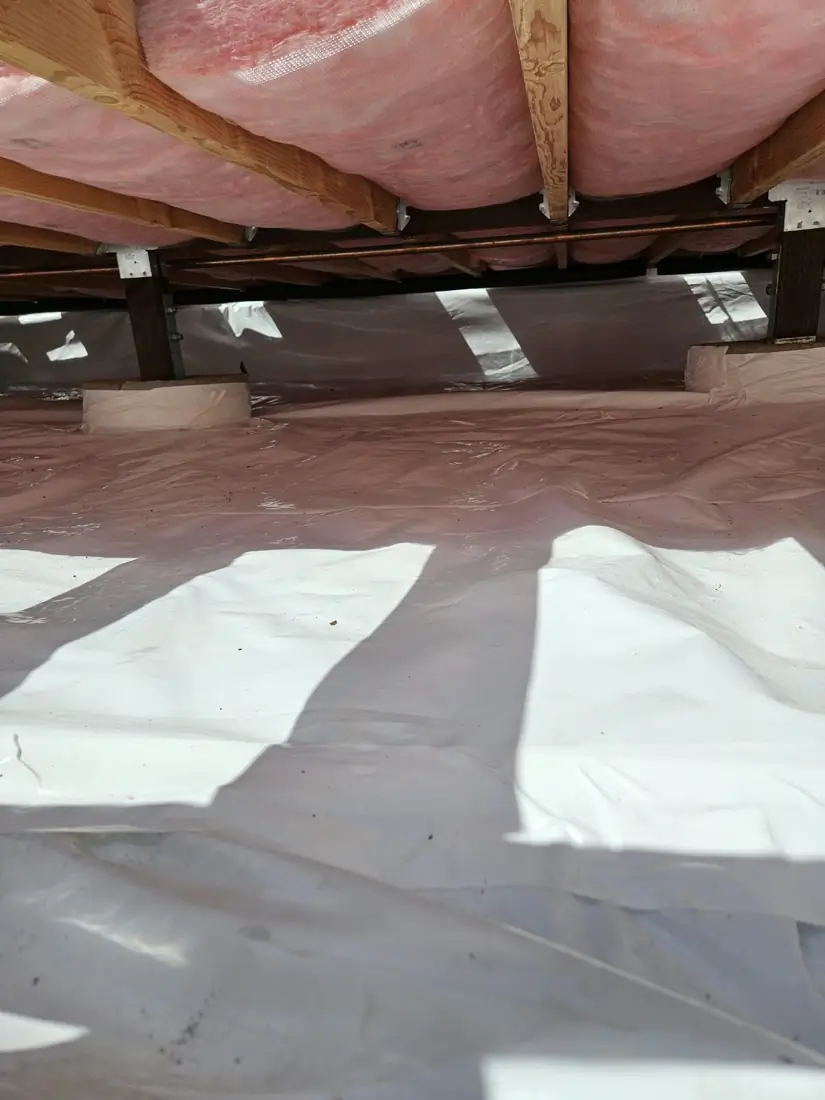
- Vapor barrierWhere the soil is exposed, we lay a polyethylene ground cover with overlapped seams to cut moisture rising from the dirt.
Problems we fix under the house
Cold floors
This is the number one reason people call us about their crawl space. When the floor above is bare, or the old batts have dropped into the dirt, the floor is only as warm as the air blowing through the foundation vents. Supported underfloor insulation makes a noticeable difference, especially in kitchens, bathrooms and hallways with hard flooring.
Moisture and musty smells
Bare soil gives off moisture constantly. That moisture ends up in the framing, the insulation and eventually the air inside the house. A ground vapor barrier cuts that moisture load. If there is standing water or an active plumbing leak, that has to be fixed first, and we will tell you if we see it.
Rodents and fallen insulation
Rodents nest in crawl space insulation and pull it down. If you see batts hanging or lying on the ground, the insulation is not doing anything and may be contaminated. We remove it, and if the attic has the same problem, see insulation removal.
New construction and raised foundation floors
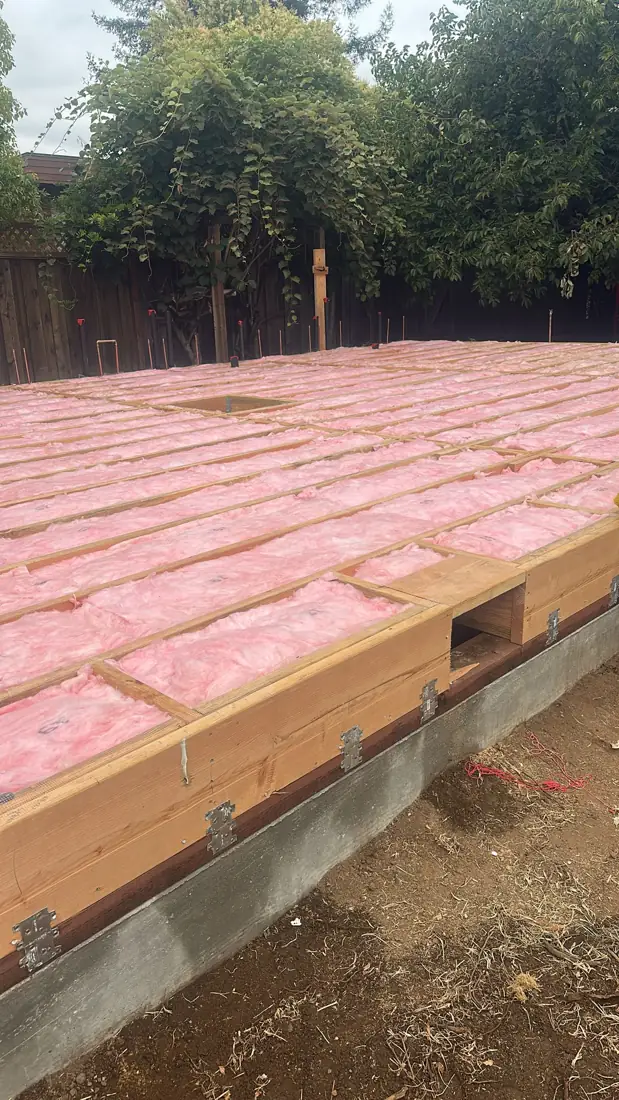
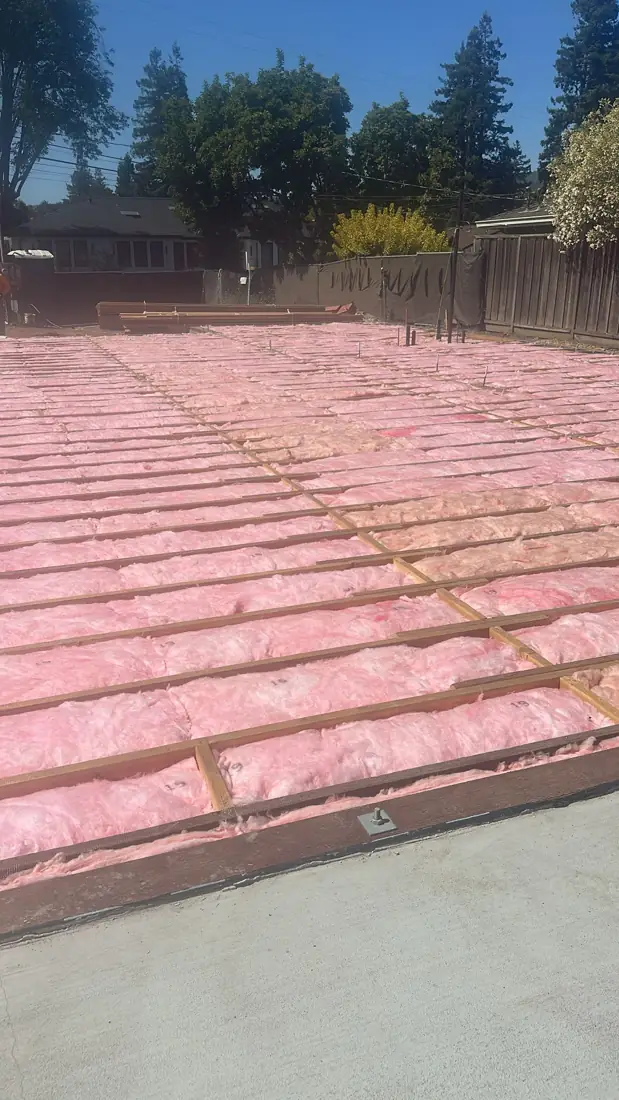
We also insulate floors on new homes and ADUs built on raised foundations, before the subfloor goes down. It is the easiest time to get full, even coverage, and the photos below are from exactly that kind of job.
Vapor barrier vs. full encapsulation
| Underfloor insulation + vapor barrier | Full encapsulation | |
|---|---|---|
| What it is | Insulate the floor above, cover the soil | Seal the whole crawl space, walls and vents |
| Vents | Stay open | Closed and sealed |
| Typical in the Bay Area | Yes, most homes | Less common, moisture problem homes |
| Scope | Usually one day | Larger project, often with a dehumidifier |
For most Bay Area homes with a vented crawl space, supported R-19 underfloor insulation plus a ground vapor barrier is the practical, proven setup. If your crawl space has chronic moisture, we will talk through whether a bigger approach makes sense.
What affects the cost of crawl space insulation
- Square footage of the floor above the crawl space
- Crawl space height and access. Tight crawl spaces take longer
- Whether old insulation and debris need to be removed first
- Vapor barrier coverage and thickness
- Plumbing, ducts and obstructions to work around
You get a written estimate after we have been under the house. If your attic is also thin, pairing the crawl space with attic insulation covers the top and bottom of the house in one visit.
Signs your crawl space needs attention
- Floors that feel cold in winter, especially tile and hardwood
- A musty or earthy smell inside the house
- Batts hanging down or lying on the ground under the house
- Bare dirt with no ground cover, or damp soil after rain
- Droppings or nesting material near the crawl space access
What we look for while we are down there
Because we are already under the house, we keep an eye out for anything you should know about: plumbing drips, disconnected dryer vents, broken foundation vent screens that let animals in, and ducts that have come apart. We do not repair plumbing or ducts ourselves, but we will photograph what we see so you can get it handled by the right trade.
We insulate crawl spaces and raised foundation floors throughout San Jose, Willow Glen, Campbell, Los Gatos, Santa Clara, the Peninsula and the East Bay, where many older homes sit on raised perimeter foundations.
Frequently asked questions
Do I need a vapor barrier in my crawl space?
If the ground under your house is bare dirt, a vapor barrier is a good idea. It cuts the moisture rising from the soil, which helps with musty smells, damp framing and pests, and it protects the underfloor insulation.
What R-value should underfloor insulation be in the Bay Area?
R-19 is the most common underfloor spec for Bay Area homes and is what ENERGY STAR recommends for floors in the San Jose climate. Some new construction plans call for more. We match the plans or recommend what fits your joists.
Why is the insulation under my house falling down?
Usually it was never properly supported, it got wet, or rodents pulled it down. Fallen batts do almost nothing. They need to be removed and replaced, then held tight to the subfloor with supports.
What is the difference between a vapor barrier and crawl space encapsulation?
A vapor barrier covers the ground with a plastic sheet. Encapsulation seals the whole crawl space, including the walls and vents, and usually adds dehumidification. Most Bay Area homes with vented crawl spaces get underfloor insulation plus a ground vapor barrier.
How long does crawl space insulation take?
Most homes are done in one day. If old batts and debris need to be removed first, plan on one to two days.
Will crawl space insulation make my floors warmer?
Yes. Cold floors in winter are the most common complaint from homes on raised foundations, and properly installed, supported underfloor insulation is the fix.
Related services
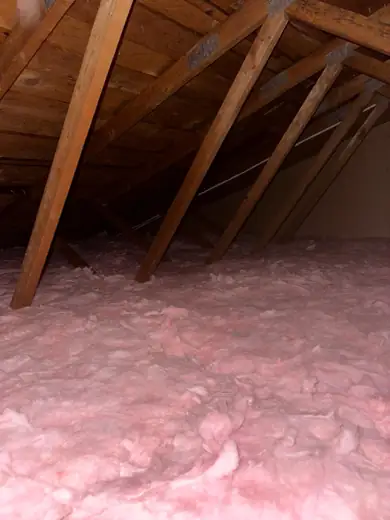
Attic Insulation
Blown-in and batt attic insulation brought up to the R-38 to R-49 range, with air sealing first.
Learn more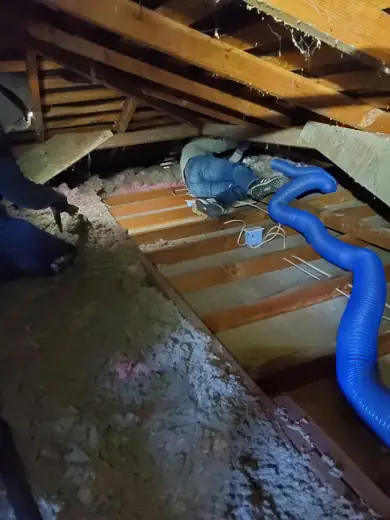
Insulation Removal
Vacuum removal of old, compressed, wet or rodent-damaged insulation, then attic sanitizing.
Learn more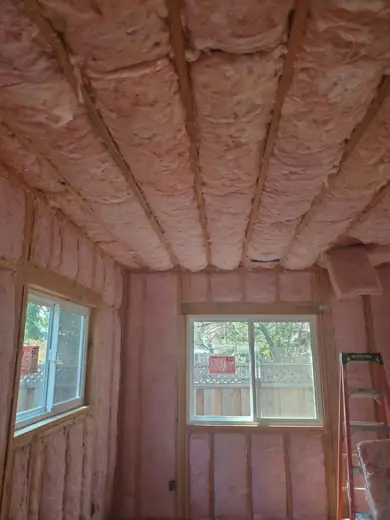
Batt Insulation
Fiberglass and mineral wool batts for walls, ceilings and floors in new builds and remodels.
Learn more