
Yes, we insulate existing, closed walls in San Jose and across the Bay Area using the drill and fill method, and most homes are done in one to two days. No tearing out drywall, no gutting rooms. Small holes, a full cavity, and a patch you can paint over.
If your home was built before the late 1970s, there is a good chance the exterior walls have nothing in them at all. California's first energy code for homes did not arrive until 1978, and plenty of Bay Area houses from the 1940s through the 1970s were framed, sided and drywalled with empty stud bays. You feel it as walls that are cold to the touch in winter, rooms that never hold heat, and street noise that comes right through.
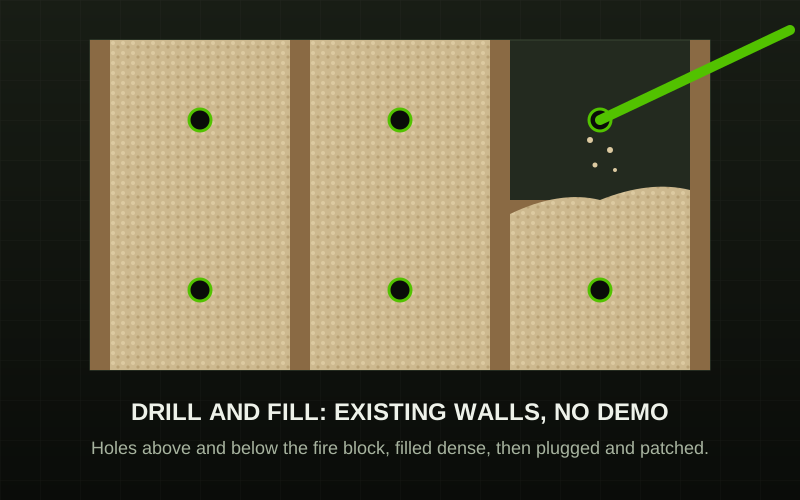
How drill and fill works: holes above and below the fire block so each section of the stud bay is filled.
How drill and fill works, step by step
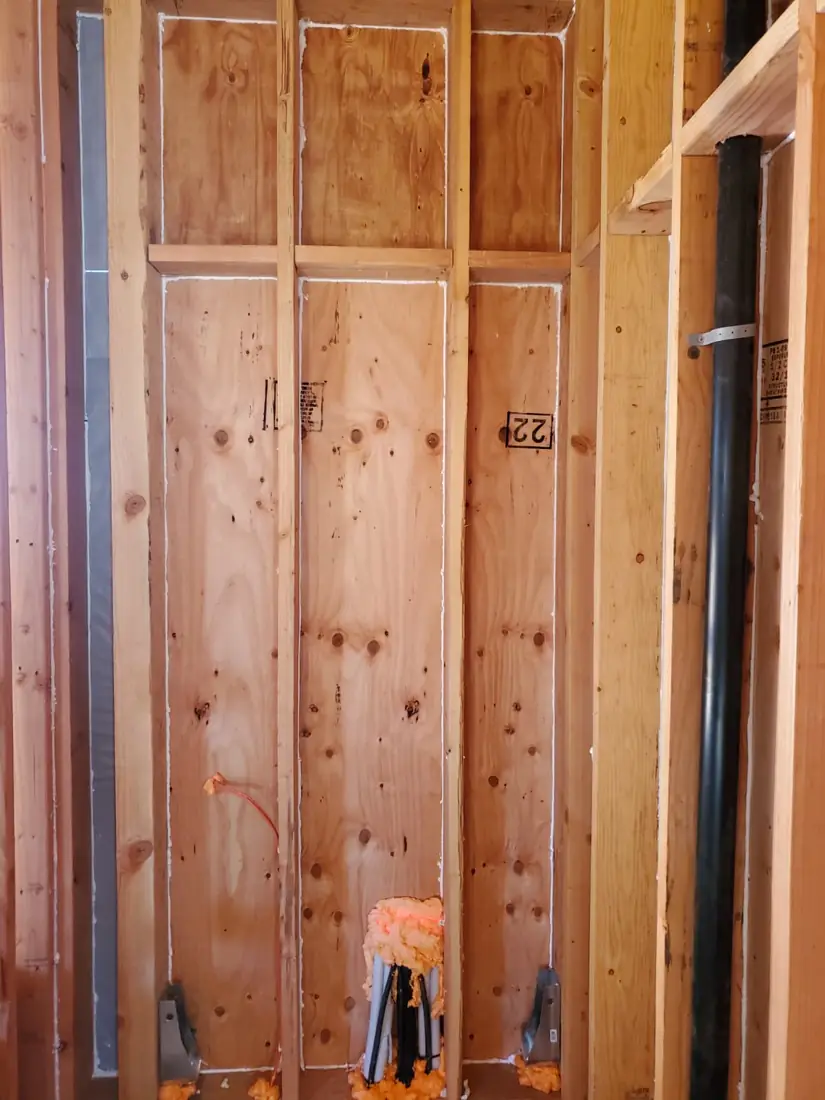
- InspectionWe confirm the walls are actually empty, check the wiring type, look for fire blocking, and decide whether to drill from inside or outside based on your siding and finishes.
- Layout and protectionWe mark each stud bay and protect floors, furniture or landscaping depending on which side we are working from.
- Drilling access holesSmall holes go into each cavity, usually one near the top and one below any fire block, so every section of the bay gets filled. On some sidings we remove a board and drill behind it so nothing shows.
- Dense fillInsulation is blown in through a fill tube until the cavity is packed full. A dense fill slows heat and also cuts air movement inside the wall.
- Plug, patch and checkHoles are plugged and patched, ready for paint. We spot check that bays are full before we pack up.
Why empty walls are a bigger deal than people think
Walls cover more surface area than any other part of the house. An empty 2x4 wall is essentially a hollow box with drywall on one side and sheathing or siding on the other.
Cold walls and uneven rooms
If you have rooms on the north side or corners of the house that are always colder, empty exterior walls are a likely cause. Filling a standard 2x4 cavity gets you to roughly R-13, which is a real change from nothing.
Air moving inside the wall
Empty cavities let air move freely between outlets, gaps at the top plate and cracks at the floor. Dense blown insulation reduces that movement, so you get fewer drafts at outlets and baseboards.
Noise
Hollow walls act like drums. Homeowners near busy streets, freeways or noisy neighbors often tell us the quiet was the biggest surprise after a drill and fill job.
Things we check before drilling
Knob and tube wiring
Many older Bay Area homes still have knob and tube wiring in some walls. It was designed to cool in open air, so insulation generally should not go around live knob and tube runs until an electrician evaluates or replaces it. We look for it during the inspection and will not fill those bays without the all clear.
Moisture and exterior condition
If siding or stucco is cracked and letting water in, insulation can hold that water against the framing. We look at the exterior and tell you if something needs fixing first.
Interior or exterior access
Drilling from outside means no dust inside and no interior patching, which is ideal for wood, composite or vinyl siding. With stucco, interior drilling can give a cleaner finished look. Either way, you choose after we explain the tradeoffs.
Drill and fill vs. opening the walls
| Drill and fill | Open walls, install batts | |
|---|---|---|
| Best when | Walls are finished and staying | You are already remodeling or replacing drywall |
| Disruption | Low, small holes | High, drywall removal and replacement |
| Time | 1 to 2 days for most homes | Part of a larger remodel schedule |
| Result | Full cavity, about R-13 in a 2x4 wall | R-13 to R-15 in 2x4, R-19 to R-21 in 2x6 |
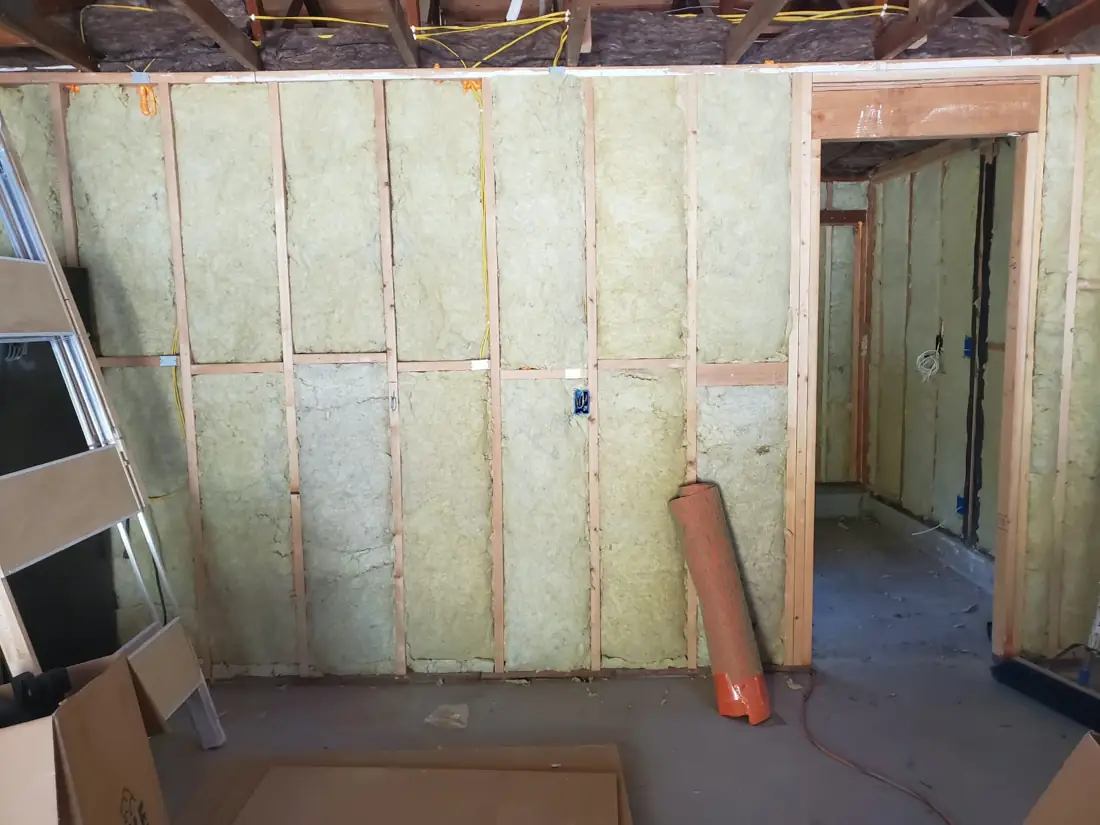
If you are already opening walls, see our batt insulation page instead. And since the attic is usually the bigger loss, many homeowners pair wall work with an attic insulation upgrade.
What affects the cost of wall insulation
- Number of walls and total wall area being filled
- Drilling from inside or outside, and the siding or stucco type
- Fire blocking, which adds holes per bay
- Patching and finishing expectations
- Any electrical or moisture issues that need to be handled first
You get the full scope and price in writing after the inspection, before we drill a single hole.
Signs your walls are empty
- Exterior walls feel noticeably cold to your hand on a winter morning
- Outlets and switch plates on outside walls let in a draft
- Rooms on the corners or the north side never warm up
- You can clearly hear traffic, neighbors or the street through the walls
- The house was built before 1978 and has not had wall work since
The quickest way to know for sure is to take the cover off an outlet on an exterior wall (with the power off) and look into the gap beside the box, or to have us check with a quick probe during the inspection. Many owners are surprised to find nothing but air.
Common in these Bay Area neighborhoods
We fill walls in postwar ranch homes and 1950s to 1970s tract houses around San Jose, Santa Clara, Sunnyvale and Campbell, and in older homes in Oakland, Berkeley, San Mateo and San Francisco. Stucco, wood lap and shingle siding all have their own approach, and we have worked with every one of them.
Frequently asked questions
Can you insulate walls without removing drywall?
Yes. That is exactly what drill and fill is for. We drill small access holes into each stud bay, blow insulation in until the cavity is full, then plug and patch the holes. The walls stay in place.
Is it better to drill from the inside or the outside?
It depends on the siding and the interior finish. Drilling from outside keeps the dust out of your house and works well with wood or composite siding. Drilling from inside can be the better choice with stucco. We recommend one after seeing the house.
Will the holes show after drill and fill?
They are plugged and patched. On the inside, patched drywall is primed and ready to paint. On the outside, plugs can be painted to match. On textured stucco a trained eye may still spot the patches, so we talk through that before we start.
Is drill and fill safe with old knob and tube wiring?
Not until an electrician has evaluated it. Knob and tube wiring was designed to shed heat into open air, so insulation generally should not be packed around live knob and tube runs. We check for it during the inspection.
Does wall insulation help with noise?
Yes. Filled wall cavities noticeably cut street noise, neighbor noise and sound between rooms, especially compared to hollow walls.
How long does drill and fill take?
Most homes take one to two days, depending on how many walls are being filled and whether we are drilling from inside or outside.
Related services
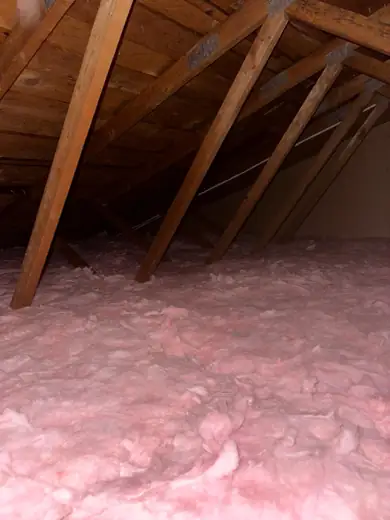
Attic Insulation
Blown-in and batt attic insulation brought up to the R-38 to R-49 range, with air sealing first.
Learn more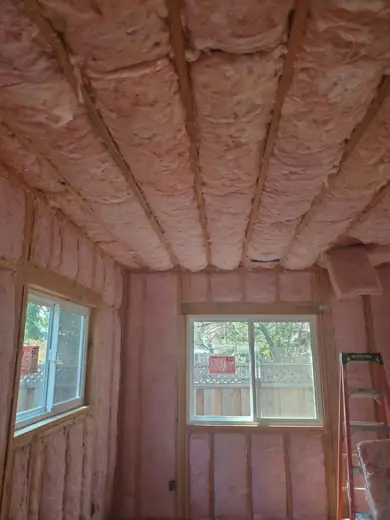
Batt Insulation
Fiberglass and mineral wool batts for walls, ceilings and floors in new builds and remodels.
Learn more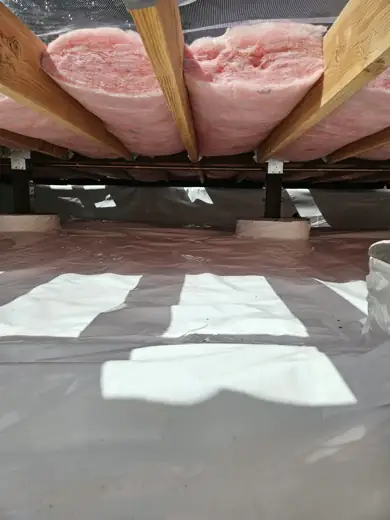
Crawl Space Insulation
Underfloor batts held tight to the subfloor, plus a ground vapor barrier.
Learn more